Automation blog
Creating smarter, faster, and simpler multi-robot packaging lines?
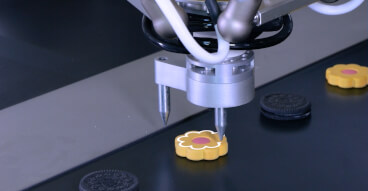
16. januar 2025 Does integrating robotics into a packaging line feel like solving a puzzle with too many pieces? Designing a high-performing packaging line with multiple robots often involves navigating complex integrations, precise motion control, and the need to meet tight production demands. Whether you are a System Integrator crafting tailored solutions for specific client needs or an OEM developing scalable, standardized systems, the OMRON Robotics Packaging Library provides the tools to simplify integration and reduce engineering time. Here’s how the Robotics Packaging Library helps you improve performance and reduce complexity in packaging automation.
From optimization to autonomy - Top five manufacturing automation trends for 2025 from OMRON
4. januar 2025 As we step into 2025, the world of industrial automation is approaching a new chapter. According to OMRON's SINIC Theory, which ties technological advances to societal change, we’re now moving from the Optimization Society to the Autonomous Society. The theory, created in 1970 by OMRON’s founder Kazuma Tateishi, predicts future societal and technological developments to guide innovation. In the Optimization phase, the focus has been on refining processes, boosting efficiency, and using technology to improve operations. But the Autonomous Society is a whole new era—one where systems don’t just run efficiently; they become self-regulating, self-learning, and capable of independent decision-making.
Securing a battery-powered future through automated recycling
17. december 2024 Batteries have a crucial role to play in facilitating the scaling up of renewables in the power mix and the electrification of transport, as we transition away from fossil fuel dependence and towards cleaner energy technologies to meet the targets agreed at COP 28.This has sent the battery market on an upwards trajectory, with two sectors - power and transport - driving demand. According to the International Energy Agency (IEA), the energy sector accounts for over 90% of overall battery demand. It reported that in 2023 alone, battery deployment in this sector increased by more than 130% year-on-year, adding a total of 42 gigawatts (GW) to electricity systems around the world. Energy storage is emerging as a major application for batteries as a means of capturing renewable energy and is only going to become more important in the future. In the transport sector, meanwhile, batteries have facilitated the rise of electric cars, bikes, trucks, buses and other battery-powered vehicles.
Beyond tech for tech’s sake: What happens when industrial automation meets operational excellence
30. november 2024 The past few years have seen rapid technological advancements, with the rise of AI standing out as a key trend. In a survey of manufacturers across the UK, US, and Canada, 70% said they had implemented some form of AI into their operations. This willingness to embrace new technologies is impressive, especially since manufacturing industries have so much to gain from automation.
Taking the first steps to successful digitalisation
12. november 2024 Building a digital factory isn’t an end or a reason in itself. A digital factory is a tool that gives manufacturing businesses the flexibility to respond to changes in the market - whether that is innovation trends or cost increases, and whether they are operating in the food & beverage, personal care, pharmaceutical or automotive sector.
PPWR: why cross-chain collaboration, traceability and smart packaging are key
24. september 2024 According to Eurostat figures, in 2021, each person living in the EU generated 188.7 kg packaging - almost 32 kg more than in 2011. Over this period, the amount of plastic packaging waste increased by 27%. Whilst recycling rates have also increased, a large volume of plastic packaging is still not being recycled - the latest statistics suggest that only a handful of countries in Europe are achieving a 50% recycling rate for plastics. Recognising that the existing legal framework was failing to drive improvement in packaging waste reduction, in 2022 the Commission proposed a revision to the 2018 directive for Packaging and Packaging Waste Regulation (PPWR).The revised PPWR is expected to enter into force by end of this year, and will fundamentally change the way packaging is designed, consumed and disposed of. The updated regulation is broad in its scope, but the underlying aims are to reduce the amount of packaging waste generated and increase packaging recyclability.
Avoiding efficiency blockage: Why companies should not postpone their robotics plans?
24. september 2024 Delaying investments in innovative technologies is associated with numerous risks. Companies that are still hesitant should ask themselves three questions.The European economy faces a range of challenges that impact its growth, stability, and competitiveness. Europe, for example, has one of the oldest populations in the world. An aging workforce increases the burden on social security systems and reduces the labor supply, potentially slowing economic growth. Furthermore, the EU's commitment to the Green Deal and achieving carbon neutrality by 2050 requires substantial investments and structural changes in various sectors. Added to this is a lack of willingness to invest due to financial worries. A recent study by the McKinsey Global Institute (MGI) found that large European firms with more than $1 billion in revenue have fallen behind their US counterparts. They collectively invest $400 billion a year less and grow one-third more slowly.This investment fatigue can lead to several problems that have both short- and long-term effects, including disadvantages in terms of competitiveness, sustainability, and reputation, lower productivity, and less success in attracting new skilled workers. Innovative robotics can counteract such developments but also requires well-thought-out financing. Therefore, companies that are currently limiting their investments should urgently ask themselves whether this will not have more negative consequences for them in the long term than short-term savings. The following three questions should be the focus of such considerations:
Digitising with open standards: the recipe for a good night’s sleep
2. september 2024 Can we commit to the predictions I have made? Will we be able to deliver to the deadline? Do I have enough insight to know for sure? How is the factory doing in terms of QCDE (quality, cost, delivery time and environmental impact) against our targets and compared to the competition? These are some of the concerns that keep factory managers awake at night; concerns that can be addressed through digitisation. In a digitised production environment, factory managers don’t have to worry about the unknowns, the risks and the might-happens. Digitisation eliminates uncertainty and enables performance-driven optimisation. It provides insights that can help factory managers improve quality, reduce cost, shorten lead times and reduce environmental impact. The manager of a digitised factory shouldn’t wake up worrying in the middle of the night, but if they do, a brief glance at their mobile phone should reassure them that everything is running as it should be. However, moving from a state of anxiety-induced insomnia to one of blissful somnolence is not easy. Put bluntly, digitisation can be quite tedious. Project leaders rarely have the luxury of working with a blank canvas; most of the time they are working with a patchwork quilt of old technologies sewn together; they are trying to digitise production lines incorporating machines that have never logged data and were built before data communication protocols even existed. This all adds up to a sizeable OT and IT integration challenge.
Dynamic lineside replenishment: a strategic response to today’s manufacturing challenges
15. juli 2024 It’s time for a rethink on lineside replenishment systems and practices, if manufacturers are to remain efficient and competitive whilst meeting the challenges posed by customisation and labour shortages. Could AMRs and cobots be the answer? The customisation trend has created numerous operational challenges for manufacturers; the need to accommodate a wider array of components and materials introduces variability that traditional systems struggle to manage efficiently. This can lead to increased inventory costs, longer lead times and production delays. Empirical data underscores the impact of customisation on manufacturing operations; manufacturers reported to have faced extended lead times, higher production costs, and the need to manage multiple inventories. These figures illustrate the tangible challenges that customisation poses, necessitating innovative approaches to manage this complexity efficiently.
Robotic Trends 2024: Simple and flexible application essential to reach full potential
15. juli 2024 From load carrier to colleague to team player: the role of robots has changed dramatically over the past seven decades. AI is creating more possibilities, but humans remain the determining factor. Robots or humans – who will determine production in the future? Since George Devol's 1954 patent for a programmable manipulator, this question has sparked debate. Devol's Unimate robot revolutionized industry by safely performing dangerous tasks, highlighting that the focus isn't robots vs. humans but rather "robot + human = efficiency." Over 70 years, industry demands have evolved to prioritize flexibility, scalability, adaptability, and sustainability. Robots handle tasks that free humans to focus on value-added activities.
Joining the dots: Automating feeding activities for a competitive advantage
18. juni 2024 Developments in robotics are facilitating the conception of flexible line-side feeding and handling systems that can enhance safety, productivity and quality whilst addressing labour shortages. Factory automation usually starts with the dots. By this we mean the big ticket plant that performs complex and visibly value-adding tasks - whether that is flow wrapping, injection moulding, blister packing, bottling, palletising or other core manufacturing processes. The lines that join those dots together - handling, loading and feeding systems - tend to be more of an afterthought, to the point where these activities are often carried out manually. It might seem easier and cheaper to have an operator loading raw materials onto the production line, or feeding components into machines, rather than spending on automation. But this is a shortsighted view that misses the many business benefits that automated line-side feeding and handling can deliver in terms of efficiency, product quality, scalability and health & safety. It is also a view that is increasingly outdated given the pressure that the current labour crisis is exerting on the manufacturing sector.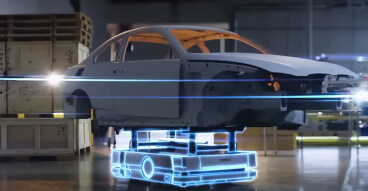
Top 4 challenges EV manufacturers face in their journey to achieving a sustainable future
17. juni 2024 Electric vehicles (EVs) have transitioned from a niche market to a major industry force in recent years. As of 2023, electric cars account for nearly one in five vehicles sold, with sales increasing by 3.5 million units—a 35% jump from the previous year, according to the IEA's Global EV Outlook 2024. This surge is expected to continue, with projections indicating that sales in emerging markets will exceed 1 million units in 2024, marking a 40% increase from 2023. Governments worldwide are pushing to reduce CO2 emissions, which is speeding up this shift to electric vehicles. So, what does this mean for automotive manufacturers? First, it means they need to pivot to designing and producing predominantly electric fleets, a move many have already started. Second, it means building new production lines and mastering new manufacturing processes, which can be quite a challenge. This is where a trusted automation partner comes in. Partnering with an expert in automation can help manage the complexities of this industry-wide transition. With a broad technology portfolio, global support, and deep automotive expertise, OMRON is ready to guide manufacturers on their electrified journey. This blog post will explore the top challenges in the EV manufacturing sector and how partnering with OMRON can provide effective solutions: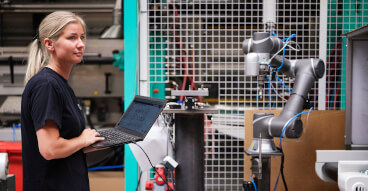
Unika makes Landmark decision to bring quality levels to new heights
25. august 2021 OMRON TM cobots with integrated vision system eliminate human error, increase production efficiency.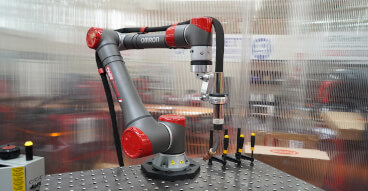
Flexible, safe and easy collaborative welding solution from Guidetti Technology
20. august 2021 Guidetti Technology SRL has integrated OMRON collaborative robots (cobots) into its ‘EasyArc’ welding solution. This is used in collaborative applications on small batches of various types of metal carpentry
How labour shortages are affecting the logistics sector and why automation is the solution
11. august 2021 By Stuart Coulton, Regional Manager, OMRON UK North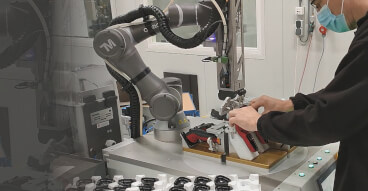
Professional help for personal care: Putting a cobot to work
9. juli 2021 Of the many processes involved in finalising a consumer product, the final step can often be the most intricate. For this OMRON customer, the last step in production is to fasten the cover holding screw, closing up the unit—in this case, an electric shaver. Traditionally, the full process was completed manually, with an electric screwdriver in a multi-step process. This repetitive task is an ideal candidate for the help of an OMRON cobot.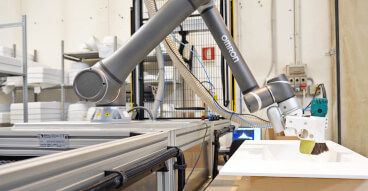
Cobot boosts production by 15% at Topcustom
23. juni 2021 Topcustom srl, an Italian producer of custom-made bathroom sinks, has recently transformed part of its operations by deploying a collaborative robot (cobot) from OMRON. The new cobot is being used to automate all the finishing operations of Topcustom’s products made from Ocritech. This is a light material that is easy to work, guarantees perfect hygiene and has excellent resistance to UV rays.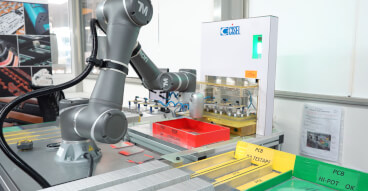
Cisel ensures traceability, safety and quality by testing printed circuit boards with a cobot
17. juni 2021 Cisel is an Italian company that specialises in the design and production of flexible printed circuit boards (PCBs) for the automotive, civil engineering and manufacturing industries. The company recently chose an OMRON TM5 collaborative robot (cobot) to automate the electrical testing of boards used in the power steering system of a leading automotive manufacturer.
UV-C Robot helps businesses win the fight against Covid
16. juni 2021 As the UK’s customer-facing businesses plan their reopening strategies, keeping consumers and staff safe from Covid will be a key priority. In a bid to prevent future outbreaks at high footfall, everyday environments like supermarkets, bars and gyms, we have teamed up with UV Systems UK to produce an autonomous robotic sterilisation system that guarantees to kill the virus without damage or harm to surrounding goods.
Cobot ensures precise assembly of magnets for LITMAT’s drain plugs
3. juni 2021 Collaborative robots (cobots) are being used more and more extensively, in a range of different industries and across a wide variety of applications. They can make a significant difference to the efficiency and productivity of the production cycle. One company that is enjoying such benefits is LITMAT SpA.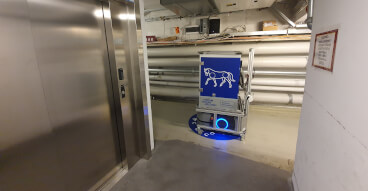
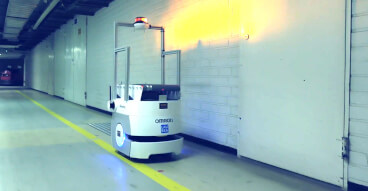
Mobile robot transports waste for Kymenlaakso Central Hospital in Finland
7. april 2021 Waste transportation and logistics planning require a lot of work in hospital environments. Waste shipment is also a physical task that places demands on both time and human resources.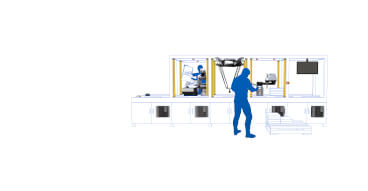
Choosing a robot for a smart factory
2. april 2021 Anyone planning to move towards a smart factory needs to choose carefully when considering possible robotic solutions. Should it be an industrial robot or a collaborative robot (cobot)? Autonomous mobile robot (AMR) technology or a fixed selective compliance assembly robot arm (SCARA)? The answer will depend on your specific needs.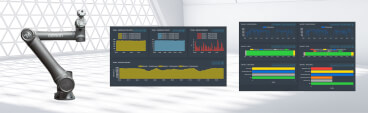
Cobot Dashboard: How to visualize data for OEE improvement the smart way
16. marts 2021 The factory of the future is not only based on a well-orchestrated interaction of the most diverse machines, robots, sensors, and AI technologies. Entrepreneurs and decision-makers are also increasingly faced with the challenge of reconciling the vast amounts of data collected by the various production lines and making the best possible use of it to support their decisions. Not only does a comprehensive data strategy need to be developed. There are also technologies required that process and present the data in such a way that issues are immediately identified before major problems occur.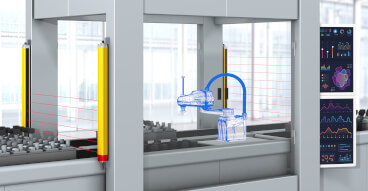
A meeting of minds: IT/OT convergence in industrial automation
22. september 2023 Future-focused manufacturers are edging closer to their ideals of flexible, efficient and sustainable production by exploring digital transformation in earnest. However, as interest in digitalisation builds, it is becoming apparent that a huge gulf exists between the worlds of OT (Operational Technology) and IT (Information Technology). And this divide needs to be bridged if today’s visions for factories of the future are to become tomorrow’s reality.But before we look at why a convergence of IT and OT is necessary and how this can be achieved, let’s take a step back to basics and clear up some misunderstandings around the terminology.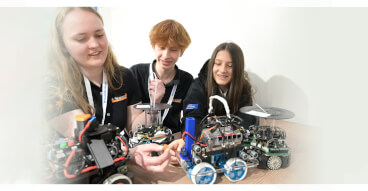
Empowering the workforce: OMRON's approach to skills development in European manufacturing
6. september 2023 Delving into OMRON's unwavering commitment to nurturing skills that empower the next generation, while the industry embarks on a transformative journey – a journey that unlocks the full potential of the Fourth Industrial Revolution (4IR) while boldly moving towards the Fifth Industrial Revolution (5IR).In the halls of academia, the boardrooms of visionary business leaders, and the chambers of forward-thinking politicians, a fervent debate evokes. It revolves around the profound shift from the Fourth Industrial Revolution, 4IR, or Industry 4.0 as it is also known, to Industry 5.0 will change the world in which we live.Historically the Industrial Revolution was the First Machine Age, and electricity the Second, then electronics was the Third, and the internet as platform the Fourth Machine Age. We are now entering the Fifth Machine Age, which highlights harmonious human-machine collaboration and the contributions of the industry to society. This is the moment to not only adapt but to lead, to pioneer, and to create a future where innovation knows no bounds. Klaus Schwab, the founder and executive chairman of the World Economic Forum has observed that: “We stand on the brink of a technological revolution that will fundamentally alter the way we live, work, and relate to one another. In its scale, scope, and complexity, the transformation will be unlike anything humankind has experienced before. Our world is undergoing a transformative shift. Global production is evolving, driven by the automation of traditional industrial practices through smart technology, M2M communication, and IoT integration. This synergy fuels heightened automation, seamless communication, and intelligent machines that autonomously analyse and diagnose challenges.The rise of AI sparks debates, hinting at deeper transformations within our societal tapestry. As we navigate this dynamic landscape, we are poised to embrace innovation and reshape our future.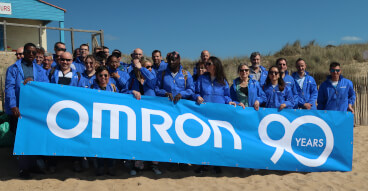
From red lights to robots: OMRON celebrates 90 years of innovation
6. juni 2023 This year on Founder’s Day, OMRON looked back on 90 years of pushing technological boundaries, and looks forward to a future of automation innovation framed by sustainability, digitalisation and human-machine collaboration.May the 10th be with you… Every year, 10th May is probably the most important day in OMRON’s calendar. On this day, 30,000 OMRON employees around the world celebrate the life and legacy of the company’s founder, Kazuma Tateishi. They do this by recommitting to Tateishi’s vision of using technology to create a better world and by giving back to society - often by participating in volunteer and charity projects in their communities. Innovation Milestones OMRON's journey of innovation began in 1933 with the development of a high-precision timer for X-ray photography. This marked the company's first contribution to addressing societal needs. In 1960, OMRON unveiled the world's first non-contact proximity switch, revolutionizing advanced mass production capabilities. Since then, OMRON has continued to introduce groundbreaking technologies, including the first automatic traffic signal, unmanned train station system, wearable blood pressure controller, ultra-high-speed fuzzy logical controller, and automatic cancer cell diagnostic equipment.
Artificial Intelligence: don’t call me stupid
8. februar 2023 Ten years ago I was quite proud of how smart the machines in our own factory were. Now, with my today’s definition of smart, I realise they were actually quite stupid.Why? Because although they were doing what they were designed to do, the minute they encountered anything unexpected or out of the ordinary they were stumped. They resorted to asking the operator ‘what is wrong with me?’.Troubleshooting and getting machines back up and running called for smart people. Highly skilled operators. Experienced software and hardware engineers. The problem is that in the last ten years, these people have become increasingly unavailable. There quite simply isn’t enough new talent entering the industry to offset the number of workers reaching retirement age. When they leave the business, retirees take with them their hard-earned on-the-job knowledge that is a culmination of years of experience. With each departing worker, businesses are faced with the prospect of a less productive and less skilled workforce.
The path to net zero: talking tactics
1. februar 2023 The key to unlocking a net zero future in manufacturing is transforming the value chain through automation.In June 2022, New Scientist reported that a third of the world’s largest companies had net zero targets - significantly more than the same time last year.Whilst it is positive news that momentum is accelerating, the article went on to say that the details of how companies were planning to reach net zero were patchy.Which is not surprising really. Creating and implementing a net zero strategy is a huge undertaking for any business, especially with 80% of GHG emissions falling into Scope 3 - that is emissions that occur upstream or downstream in the value chain. This is a particular challenge for FMCG companies, whose supply chains and onward logistics are long and complex.Most of these businesses know what they need to do: decarbonise and circularise the value chain. And they have a strategy for doing this, which will generally cover: optimising the use of resources and energy, replacing high emission products and processes and eliminating waste.But translating intention into action is where the main challenge lies. This is where automation has a crucial role to play.Data collection and analysis is the key to successful net zero transition. Without it, how do companies know what their starting point is, where they need to improve, whether they have improved and by how much? Robust data is the foundation for turning a commitment into change, and for credibly and confidently communicating with stakeholders and delivering on climate ambitions.
Powering through the energy and fuel crisis with automation
7. december 2022 To counter rising prices and meet environmental targets, industrial enterprises should explore how automation technologies from a single source might help contribute to their sustainability strategy.High energy and fuel prices are putting a strain on both households and industry. Not only is the situation negatively impacting financial plans and wallets, but the excessive prices are forcing some companies to cease production. According to Make UK 42% of manufacturers surveyed said that their electricity bills have increased by 100% in the past 12 months and 32% said that gas prices have increased by over 100% in the past year. A worrying 12% of manufacturers have already made job cuts as a direct result of increased energy bills.The war in Ukraine, Covid-19 pandemic, and gas pricing are only a few of the causes of the crisis, which impacts all sectors and has an impact on everything from power prices to supply chains. What should manufacturing companies consider now? Comprehensive automation strategies are essential for greater flexibility and energy efficiency. This includes innovative robotics paired with sensor and vision technology as well as artificial intelligence – AI at the Edge. In addition, real-time data from production plants can assist with detecting anomalies and improving overall equipment effectiveness (OEE).
Riders of the storm: navigating economic uncertainty by turning social challenges into tech opportunities
6. december 2022 One of the questions I am often asked is what our strategy is, as an industrial automation business, for maintaining stable growth in a volatile and increasingly unpredictable global economy. My answer, as you might imagine, is not one sentence, although it is rooted in one concept: SINIC. SINIC stands for ‘Seed-Innovation to Need-Impetus Cyclic Evolution’ and is a theory that was developed by OMRON's founder, Dr. Kazuma Tateisi, in 1970. According to this philosophy, science, technology and society share a cyclical relationship, mutually impacting and influencing each other. Scientific breakthroughs help society to advance and social needs spur on technological development. OMRON Europe has always followed this philosophy, and has spent the last decade laying the foundations for creating value-adding solutions to present day social and economic challenges.
Where is the future heading, intralogistics? Tips for more efficiency
15. november 2022 Sometimes we focus so much on the big picture that we forget the smaller and yet so important processes that characterize smart production. One example is intralogistics, i.e. the flows of materials and goods that take place on a company's premises or in a production hall. A recent study found that more than 80 percent of the companies surveyed consider the increased use of AI and automation in intralogistics to be necessary to meet challenges such as the shortage of skilled workers or growth plans.Automotive companies that want to meet market and customer requirements, increase efficiency and become more sustainable must come up with new ideas. Energy costs, the gas crisis, and rising inflation make this task even more difficult. Smart factory concepts that combine innovative automation, digitalization, and smart intralogistics approaches can provide valuable support. Some speak of Industry 4.0 in this context, others of the “factory of the future”, still others prefer Industrial Internet of Things (IIoT). But no matter which term you favor: The most important thing is to become active now and to rely on reliable partners. Intralogistics is a good starting point for quickly initiating change. Because action is urgently needed: many companies are currently severely limited due to the shortage of skilled workers. Modern technologies such as mobile robots can provide a remedy.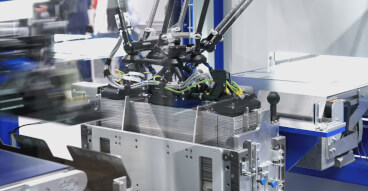
Digitalization in the automotive industry: Seven tips for smart production
2. november 2022 If you want to grow and master crises, you have to be digitally fit – this also applies to the important automotive sector. There is no way around digital tools for addressing customers or productivity. Artificial intelligence (AI) and sustainability are key drivers and focus topics, as a study by Capgemini shows. Experts from Gartner point out the importance of open-source collaboration approaches, holistic ecosystems, and technology partnerships. But what should we look out for in digitalization and intralogistics in the production of the future? We want to answer this question in two parts. We start with tips on digitization in the smart factory. As an automation expert, OMRON has been accompanying manufacturers and suppliers on their way to more digitalization sophistication for many years.
Artificial Intelligence: hope, hype and FOMO
22. september 2022 Ten years ago when we received enquiries about AI-based projects, they were mainly driven by hype or FOMO. When I asked why they wanted to get into AI, the answer, more often than not, was either ‘because my boss asked me to’, ‘because we have a lot of data’ or ‘because it seems like an interesting area’. None of these were particularly solid reasons and certainly didn’t justify the hefty investment that AI applications would have required at that time.That is changing, and hope, rather than hype or ‘FOMO’, is the driver. Customers don’t ask whether we can help them with AI anymore. They ask us whether we can help with predictive maintenance, quality control or process optimisation. They come to us with a problem that they want us to help solve. The adoption of AI is no longer a motive or an aim in itself. Instead, AI has become an ‘enabler’.Whatever the industry - whether food & drink, pharmaceutical, electronics or automotive - the end goal is the same: producing high quality, defect-free products at a lower cost, using less energy and less labour. And AI can be one of a suite of solutions for achieving those objectives.
Automation adapts to sustainable packaging
16. august 2022 Have you ever ordered a small item online, and then felt incensed when it arrived in an oversized box packed out with bubble wrap, air-filled cushions or paper inserts?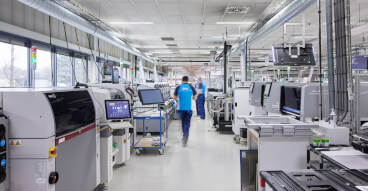
Building the Factory of the Future together
16. juni 2022 As one of the largest business units at OMRON, we aim to further develop the Den Bosch plant to serve the needs in the EMEA region.
Buying or Leasing? How to finance your new cobot
26. april 2023 Food for thought for SMEs when funding automation projectsSkills shortages, digitization, sustainability, and energy-saving plans are accelerating automation projects in many companies. Once manual processes that lend themselves to automation have been identified, the next question that usually follows is: And what does it all cost?It can make sense to consider options such as leasing or robot-as-a-service. One example of tools that give small and medium-sized enterprises (SMEs) in particular a better overview the financial aspects of automation is the ROI calculator from OMRON. Anyone currently considering the purchase of a cobot or AMR can use this tool to reveal the return on investment.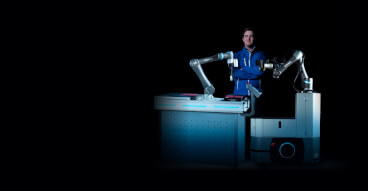
How to speed up cobot integration
8. februar 2023 Good planning and strong partners help SMEs overcome hurdles in automation.Collaborative robots, also known as cobots, are enjoying great popularity because they make it possible to automate time-consuming and resource-intensive tasks. The global market for collaborative robots is currently estimated at around $1.2 billion. The sales volume of cobots reached a total of 32,300 units in 2021. Especially in times when it is becoming increasingly difficult for companies to find and retain suitable employees, such technologies are worth their weight in gold in many places. Speaking of gold, some may ask: Cobots must be extremely expensive, right? When does such an investment pay off?Automation expert OMRON would like to alleviate such worries, especially for small and medium-sized companies: Smart and integrated robotics solutions as well as cobots and mobile robots are feasible and affordable. For those who want to estimate the return on investment, OMRON’s ROI calculator provides a quick and easy overview.Cobots and autonomous mobile robots (AMR) are suitable for both SMEs and large-scale businesses. They perform tasks such as transport, palletizing, loading and unloading of machines, assembly, painting, or welding. They can be quickly and flexibly retooled and also programmed by non-experts. Material replenishment can be streamlined with AMRs, and machine and process loading with cobots. However, to successfully carry out such projects and accelerate robot integration, know-how and partners who are familiar with the subject matter are needed. And above all, employees must be informed and involved from the start of the project to be part of the change together.Here are some tips companies should keep in mind when integrating cobots:
Artificial Intelligence: don’t call me stupid
8. februar 2023 Ten years ago I was quite proud of how smart the machines in our own factory were. Now, with my today’s definition of smart, I realise they were actually quite stupid.Why? Because although they were doing what they were designed to do, the minute they encountered anything unexpected or out of the ordinary they were stumped. They resorted to asking the operator ‘what is wrong with me?’.Troubleshooting and getting machines back up and running called for smart people. Highly skilled operators. Experienced software and hardware engineers. The problem is that in the last ten years, these people have become increasingly unavailable. There quite simply isn’t enough new talent entering the industry to offset the number of workers reaching retirement age. When they leave the business, retirees take with them their hard-earned on-the-job knowledge that is a culmination of years of experience. With each departing worker, businesses are faced with the prospect of a less productive and less skilled workforce.
Where is the future heading, intralogistics? Tips for more efficiency
15. november 2022 Sometimes we focus so much on the big picture that we forget the smaller and yet so important processes that characterize smart production. One example is intralogistics, i.e. the flows of materials and goods that take place on a company's premises or in a production hall. A recent study found that more than 80 percent of the companies surveyed consider the increased use of AI and automation in intralogistics to be necessary to meet challenges such as the shortage of skilled workers or growth plans.Automotive companies that want to meet market and customer requirements, increase efficiency and become more sustainable must come up with new ideas. Energy costs, the gas crisis, and rising inflation make this task even more difficult. Smart factory concepts that combine innovative automation, digitalization, and smart intralogistics approaches can provide valuable support. Some speak of Industry 4.0 in this context, others of the “factory of the future”, still others prefer Industrial Internet of Things (IIoT). But no matter which term you favor: The most important thing is to become active now and to rely on reliable partners. Intralogistics is a good starting point for quickly initiating change. Because action is urgently needed: many companies are currently severely limited due to the shortage of skilled workers. Modern technologies such as mobile robots can provide a remedy.
Artificial Intelligence: hope, hype and FOMO
22. september 2022 Ten years ago when we received enquiries about AI-based projects, they were mainly driven by hype or FOMO. When I asked why they wanted to get into AI, the answer, more often than not, was either ‘because my boss asked me to’, ‘because we have a lot of data’ or ‘because it seems like an interesting area’. None of these were particularly solid reasons and certainly didn’t justify the hefty investment that AI applications would have required at that time.That is changing, and hope, rather than hype or ‘FOMO’, is the driver. Customers don’t ask whether we can help them with AI anymore. They ask us whether we can help with predictive maintenance, quality control or process optimisation. They come to us with a problem that they want us to help solve. The adoption of AI is no longer a motive or an aim in itself. Instead, AI has become an ‘enabler’.Whatever the industry - whether food & drink, pharmaceutical, electronics or automotive - the end goal is the same: producing high quality, defect-free products at a lower cost, using less energy and less labour. And AI can be one of a suite of solutions for achieving those objectives.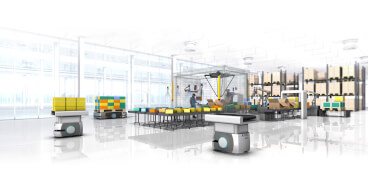
Mastering packaging and intralogistics challenges in eCommerce
24. februar 2022 Robot-assisted packaging enables fast and cost-efficient scalability upward and downward to handle swings in demands from the supply chain.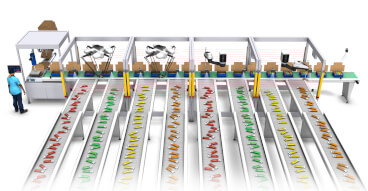
Five challenges in High-Mix, Low-Volume (HMLV) packaging and palletizing processes
21. december 2021 The new product has just left the factory, in a shelf-ready package in the specified mixed ratio to meet customer needs. The packaging has actually been handled by another company: a co-packer. Co-packing can be found in all Fast-Moving Consumer Goods (FMCG) markets, but especially in the higher-priced product segments such as personal care or confectionery, to name a few examples. It is a fast-growing activity to satisfy the consumer demand for more variety.
Productivity Peaks: Moving Maintenance From Preventive to Predictive
17. december 2021 Maintenance is a vital key to a thriving business, especially in manufacturing where 24/7 plant equipment uptime is often expected as standard. As any established enterprise knows, keeping production lines and systems running optimally requires more than a skilled maintenance team. It also involves careful planning, tight scheduling, constant vigilance, a willingness to change out unworn parts, and a readiness to respond to unplanned events. At least, it used to.
Finished seals in less than 10 seconds: Robotics Integrated Controller ensures harmonious control
24. november 2021 Trelleborg Livorno has updated a robotic cell for the finishing of polyurethane gaskets for the sustainable wind energy market. The cornerstone of the solution is OMRON's Robotics Integrated Controller that ensures integration and synchronization of all automation components, including robots, logic, motion, safety and user interface.
Plastics in consumer goods manufacturing: Seven automation tips for greener packaging
29. april 2021 Hygiene or environmental protection? Preferably both! Companies in the consumer goods industry are increasingly asking themselves what alternatives they have to plastic packaging and how they can act greener, more efficiently, and yet still safely. Innovative packaging lines, robotics and artificial intelligence offer support.
Cobot Dashboard: How to visualize data for OEE improvement the smart way
16. marts 2021 The factory of the future is not only based on a well-orchestrated interaction of the most diverse machines, robots, sensors, and AI technologies. Entrepreneurs and decision-makers are also increasingly faced with the challenge of reconciling the vast amounts of data collected by the various production lines and making the best possible use of it to support their decisions. Not only does a comprehensive data strategy need to be developed. There are also technologies required that process and present the data in such a way that issues are immediately identified before major problems occur.
Four top tips for automation projects in the food and beverage industry
22. februar 2021 A challenge accelerated by the Coronavirus pandemic has seen producers having to juggle between longer term range proliferation centred on consumer demands, and range (SKU’s) reduction caused by retailers and consumers rapidly changing buying habits. Companies that break new ground by using innovative technologies not only gain agility but also reduce scrap, contamination risk, waste and losses.
Zero-defect philosophy helps resolve the world’s future issues
5. juni 2020 Imagine the city center of a modern metropolis in 2030: a multitude of unmanned, electrically-powered vehicles driving swiftly and silently through the streets. These vehicles sense traffic lights and other road signs and make decisions using artificial intelligence. They avoid people, who unexpectedly cross their path. They detect and avoid dangerous situations before they occur. And they contribute to everyone’s health and safety. But what happens if the associated electrical systems fail? Omron is already addressing this problem today.
Energizing European battery cell production
1. maj 2020 What can European automotive companies do to future-proof their production lines, especially in relation to battery manufacturing? Robotics, automated quality control and artificial intelligence (AI) can help companies to tackle the strong competition they are facing from Asia.
Integrated data control, motion control and machine vision for next-generation automotive production line
24. april 2020 The Mexican regional headquarters of a leading manufacturer of premium air brake actuators for global on-highway and specialty markets required a new automated production assembly line. One of the company’s key performance indicators is to deliver a fully assembled product every 30 seconds, and it is with this end goal at the forefront that the team started the process of automating the production line.
ŠKODA AUTO uses LD mobile robot at Vrchlabí plant
17. marts 2020 The autonomous robot contributes to the continuous improvement of work safety in Vrchlabí and helps to minimise work risks. It recognises people crossing its path as well as other vehicles and stationary obstacles.
Green is key: sustainability in battery manufacturing for E-mobility
5. februar 2020 Today, sustainability is no longer a niche topic, but something that companies are integrating into their business strategies. Not only are sustainability practices necessary to answer the changing demands of consumers, the marketplace and governments, they are also increasingly being seen as a competitive strength. That’s because sustainability practices reduce energy consumption and waste, and also help companies use their resources more efficiently. They even help companies optimize their manufacturing agility and enable them to respond to fluctuating demand and the growing need for personalization. And finally, sustainability can play an important role in acquiring and retaining customers, as well in developing new market opportunities.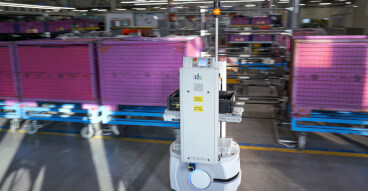
Agile and clever tailor-made mobile robotics
4. november 2019 Major German automotive group optimizes efficiency and innovation leadership in material handling with Omron LD mobile robots and a conveyor attachment from cts GmbH.Automobile production and assembly line production have always been closely linked. It was not until Henry Ford began using conveyor belts in his factories in 1913 that the car was able to conquer the world as a mass-produced product. Today, a working day without assembly lines is inconceivable at the BMW factories. The group relies on innovative transport and logistics to increase efficiency and flexibility, to better link work processes, as well as to relieve employees from repetitive and time-consuming tasks. These concepts include Omron LD mobile robots for material transport that deliver a particularly high return on investment (ROI). These autonomous mobile robots are equipped with a conveyor tower - a height-adjustable load handling device, developed by system integrator cts GmbH. The interaction between employees and transport robots at BMW impressively demonstrates how factory harmony can be implemented in the factory of the future.